



Love Without the Script: Rethinking Valentine’s Day
February 14, 2026
Rethinking Valentine’s Day starts with one honest question: does this holiday feel connecting or performative?
Each February, Valentine’s Day arrives with expectations — roses, reservations, social proof. But for many people, those expectations create pressure instead of closeness.
In this episode of Therapist Unplugged, Laurie Poole and Heather Caballero talk about how to rethink Valentine’s Day in a way that feels personal instead of performative. Instead of focusing on proof, they invite listeners to shift toward something steadier: connection.
When Valentine’s Day Feels Like a Scoreboard
For some, Valentine’s Day carries old memories. Elementary school card exchanges. Counting who received what. Noticing who didn’t.
As adults, the comparison doesn’t disappear. It just changes form. Social media, expensive dinners, and expectations about what a “good” relationship should look like can quietly turn the day into a performance.
Reframing Valentine’s Day starts with naming that pressure. When love becomes spectacle, something important gets lost. But when we untangle love from proof, small moments begin to matter again.
Love Is Bigger Than Romance
One of the most powerful themes in this conversation is widening the lens.
Valentine’s Day does not have to center only on romantic relationships. It can be an expression of appreciation for friends, family, coworkers, neighbors, or even yourself.
Heather describes thinking of Valentine’s Day as a “shared birthday” for the people she loves. If everyone you care about had the same birthday, how would you celebrate? That question shifts the focus from obligation to intention.
Rethinking Valentine’s Day means asking what love actually looks like in your real life, not in someone else’s version of it. Connection, not convention, becomes the guide.
Rituals That Reflect Real Life
Rituals can help anchor meaning. However, they do not have to be extravagant.
Some couples build traditions around resilience, like rewatching a comfort movie after a hard season. Friends might host a simple potluck or game night. Others may choose a quiet evening at home with candles and music.
The goal is not to impress. The goal is to align your actions with what genuinely strengthens your relationships.
Valentine’s Day works best when it reflects your actual life, not someone else’s expectations.
Understanding Love Languages
Another key part of this episode is the role of love languages.
Many people feel stressed on Valentine’s Day because they try to express love in a way that is not natural for them. Gifts can feel mandatory. Words can feel forced. Plans can feel crowded.
Instead, ask what actually feels meaningful.
If quality time matters most, a quiet dinner at home may feel more connecting than a busy restaurant. If acts of service are your language, doing something thoughtful without fanfare may speak louder than flowers. If words resonate most, write a letter that names what you appreciate.
And if you are single this year, you can practice those same love languages toward yourself.
Owning Your Choice
People often ask, “What are you doing for Valentine’s Day?”
That question can carry subtext.
Heather offers a simple but powerful suggestion: lead with pride. “I had a great time.” “I’m really looking forward to it.” When you speak confidently about your plans, it shifts the tone of the conversation.
You do not need to apologize for celebrating differently. You also do not need to defend a quiet night in.
Valentine’s Day does not have to be louder to be meaningful. It only needs to be intentional. When we begin rethinking Valentine’s Day, we move from comparison to connection.
Rethinking Valentine’s Day Your Way
If this holiday has ever felt heavy, this episode offers a different perspective.
Valentine’s Day can be a reminder to notice the love already present in your life. It can be a reset that draws your attention back to connection, belonging, and care. And it can include romantic love, friendship, family, community, and self-respect.
The invitation is simple: design the day in a way that fits your season.
Connection over comparison.
Intention over performance.
Your way over the script.
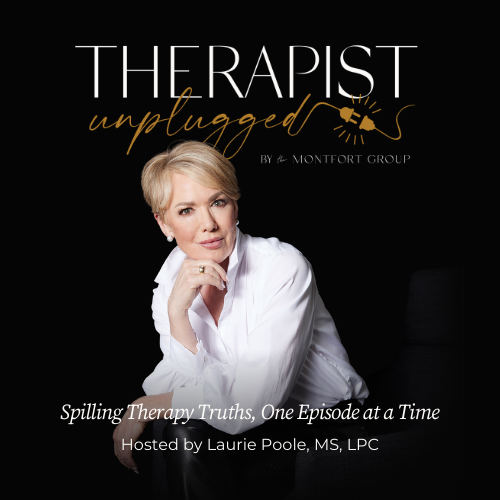
Hosted by Laurie Poole of The Montfort Group, this podcast pulls back the curtain on what really happens in and around the therapy room. No jargon, no perfection—just honest conversations about the messy, meaningful, and deeply human parts of life. We cover everything from burnout and boundaries to sex, shame, relationships, parenting, grief, identity shifts, and mental health in the modern world. Each episode features licensed therapists who get it—because we live it too.

Let's Begin

Better Begins
Start your journey with The Montfort Group.


