



Processing Grief: What Loss Teaches Us About Time, Choice, and Healing
January 17, 2026
Grief doesn’t arrive all at once, and it doesn’t follow a clear path forward. For many people, processing grief happens in waves — showing up in ordinary moments, resurfacing during milestones, and quietly reshaping how life is lived after loss.
In a recent episode of Therapist Unplugged, Laurie Poole is joined by therapist Courtney Strull for an honest conversation about grieving the loss of a loved one. Courtney shares her lived experience of losing multiple family members in a short period of time, including her father, and reflects on how grief altered her relationship with time, identity, and choice.
Rather than offering quick answers or tidy conclusions, this episode creates space for the realities of grief that are often difficult to name.
What Processing Grief Really Looks Like
One of the most common misconceptions about grief is that it follows a predictable sequence or ends at a certain point. In reality, processing grief is rarely linear. It can feel manageable one day and overwhelming the next.
Courtney describes how grief can coexist with moments of joy, laughter, and connection — and how that emotional contrast does not mean something is wrong. For many people grieving the loss of a loved one, this emotional whiplash can bring confusion or self-judgment. This conversation gently reframes those shifts as a natural part of grief rather than something to fix.
Anticipatory Grief and Sudden Loss
The episode also explores the difference between anticipatory grief and sudden loss. Anticipatory grief occurs when someone begins grieving long before a loved one dies, often during prolonged illness or decline. This kind of grief can affect daily routines, relationships, and the nervous system in profound ways.
Courtney reflects on living for years with constant fear and vigilance while her father was ill, and how that sustained anxiety shaped her priorities and capacity. Processing grief after a prolonged loss often looks different than grief following a sudden death, yet both experiences carry their own emotional weight.
Understanding these differences can help normalize why grief feels the way it does and why there is no single “right” response when grieving the loss of a loved one.
How Grief Changes Identity and Relationships
Loss doesn’t only affect emotions — it often reshapes identity. When someone close dies, especially a parent or immediate family member, roles shift and familiar anchors disappear.
In this conversation, Laurie and Courtney discuss how grief can change:
- How time is experienced
- Which relationships feel most essential
- The ability to show up for others
- Personal boundaries and priorities
For many people, processing grief involves relearning who they are in a world that feels fundamentally altered. This can be disorienting, but it can also bring clarity about what truly matters.
Healing Without Timelines or Pressure
One of the most grounding themes of the episode is the idea that healing does not mean forgetting, moving on, or returning to who you were before. When grieving the loss of a loved one, healing often looks like learning how to live alongside grief rather than trying to erase it.
Routine, self-trust, and compassion become essential tools — not as a way to bypass pain, but as a way to remain anchored through it. The episode emphasizes that there is no deadline for grief and no requirement to perform recovery in a certain way.
A Conversation for Anyone Navigating Loss
Whether you are actively grieving, supporting someone you love, or trying to understand your own response to loss, this episode offers language and perspective that many people find difficult to access on their own.
Processing grief is deeply personal, but it does not have to be isolating. Honest conversations like this one remind us that grief is a shared human experience — one that unfolds over time, shaped by love, memory, and the choices we make as we continue living.
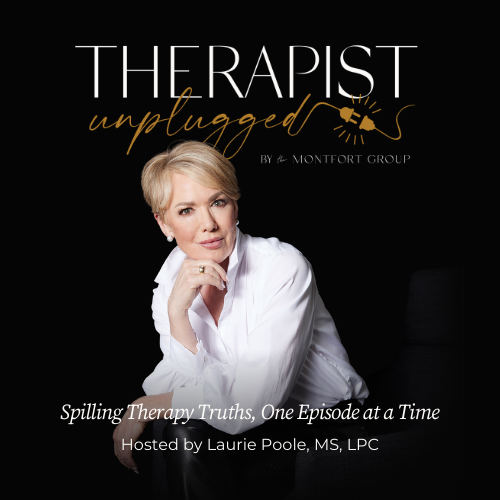
Hosted by Laurie Poole of The Montfort Group, this podcast pulls back the curtain on what really happens in and around the therapy room. No jargon, no perfection—just honest conversations about the messy, meaningful, and deeply human parts of life. We cover everything from burnout and boundaries to sex, shame, relationships, parenting, grief, identity shifts, and mental health in the modern world. Each episode features licensed therapists who get it—because we live it too.

Let's Begin

Better Begins
Start your journey with The Montfort Group.


